


Table of contents
You didn’t get into engineering to become a part-time procurement specialist. But here you are, managing BOMs, chasing quotes, and juggling supplier communications. Somewhere in that mess, someone told you “supplier portals” would solve everything.
They didn’t.
This post is your no-fluff primer on why supplier portals are a pain for your vendors, why that matters to you, and how AI is fixing the mess. Not by improving portals, but by making them unnecessary.
What Is a Supplier Portal?
Supplier portals (also called vendor portals) are software platforms where buyers and suppliers interact: issuing POs, submitting invoices, uploading tracking info. If you’ve worked with companies like Tesla, you’ve probably been asked to use one. The goal is a single system of record where everything is visible and traceable.
From the buyer’s side, this makes sense. Portals let you see status updates, track shipments, confirm deliveries, and maintain an audit trail. It’s easier than juggling spreadsheets and email threads. Some portals even promise real-time insights.
But that “efficiency” comes at a cost. And the supplier is the one paying.
Why Suppliers Hate Portals (And Why You Should Care)
Let’s say you’re working with a CNC shop that builds parts for 40 customers. Each customer wants them to log into a different portal to confirm POs, upload tracking numbers, and submit invoices. That shop is now spending hours a day just doing data entry.
Some facts:
- 60% of suppliers use 10+ portals every month
- 10% of suppliers are juggling 50+ portals
- 30% of suppliers abandon onboarding due to portal frustration
- 40% say portals increase their workload
Many portals aren’t user-friendly. Suppliers spend time watching tutorials, reading documentation, or calling customer service just to navigate clunky UIs. Each customer’s portal is different. There’s no standard layout, no universal workflow, and no API that connects everything to the supplier’s ERP.
That means data entry becomes a full-time job.
And when suppliers start picking and choosing which customers get full attention, that’s when things slip. POs don’t get acknowledged. Shipments get delayed. Payment issues pop up. All of which hit your timeline.
The Portal Trap for Engineers and NPI Teams
If you’re at a startup or managing a new product intro (NPI) at a larger company, you might not have a dedicated supply chain team. So you’re picking vendors, sending POs, following up on delivery dates, and trying to make sure parts show up on time.
Your instinct might be to find a supplier portal or tool that helps you “scale.” Something with status tracking and dashboards. Sounds great, until you realize your sheet metal shop hates your portal and goes back to emailing instead.
If your system doesn’t catch that email… you’re out of the loop.
And even if you do catch it, now you’re copy-pasting data into your spreadsheet, or your ERP, or your Monday board. That’s not scaling. That’s clerical work.
AI Isn’t Fixing Portals. It’s Replacing Them.
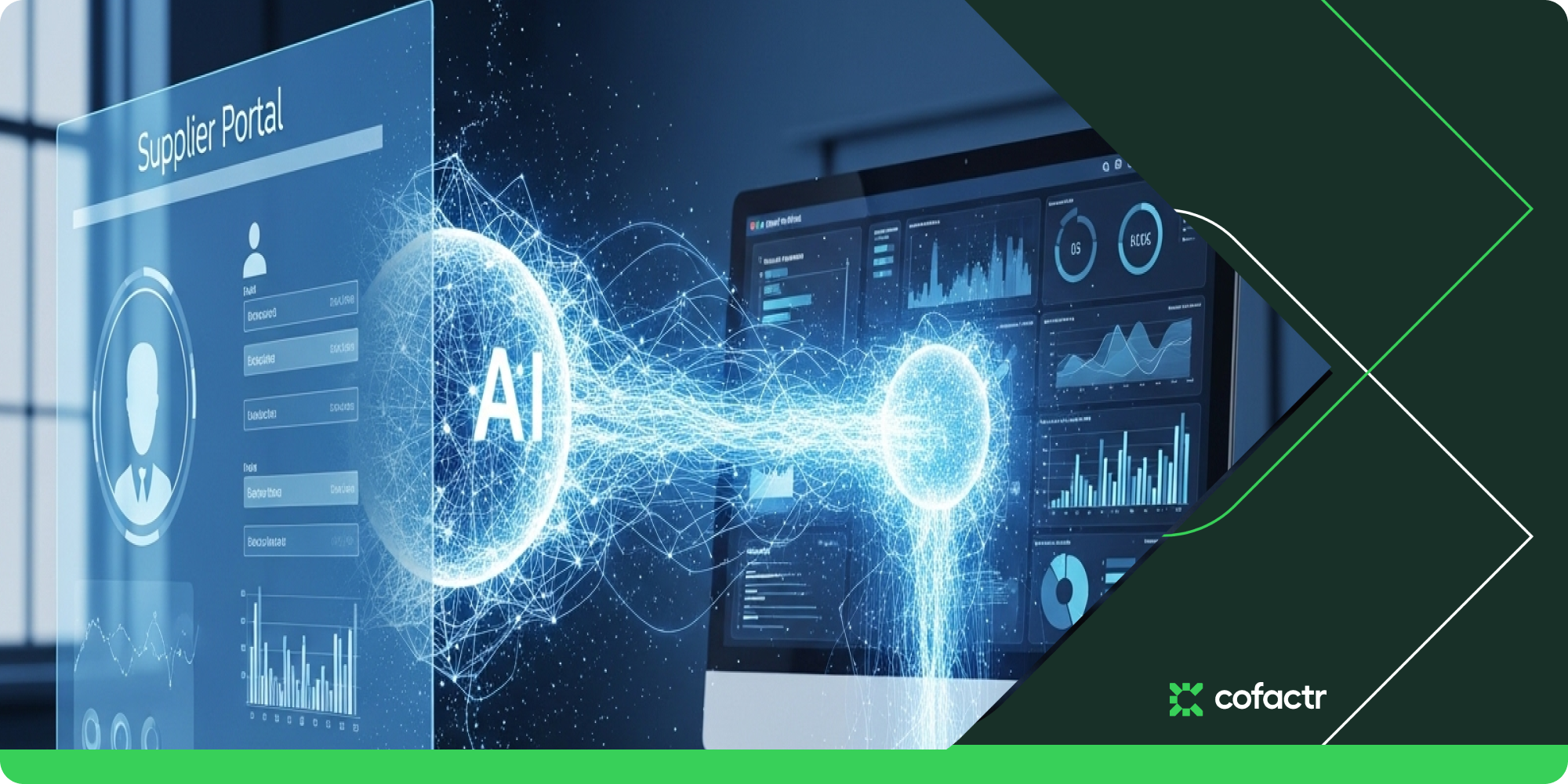
The shift isn’t about better portals. It’s about skipping the portal entirely.
AI systems can now take a supplier’s email, with attachments, Excel quotes, PDF invoices, and automatically extract and insert that data into your procurement system. Suppliers don’t have to change a thing.
The “No-Portal” Workflow
Take RH Electronics. They manage 1,000+ suppliers and 15,000+ SKUs. Instead of forcing everyone into a new portal, they used AI agents to handle communication via email:
- AI sends POs to suppliers as regular emails
- Suppliers respond however they like (PDF, Excel, plain text)
- AI reads the reply, extracts the data, updates the ERP
From the supplier’s point of view, nothing changed. No portal. No new login. Just business as usual, and it worked.
This change wasn’t just about convenience. It let RH’s 35-person team stop wasting time on clerical follow-up. They could focus on managing risk, optimizing costs, and hitting production deadlines.
Why Email Still Dominates Supplier Communication
Most small- to mid-sized suppliers don’t live in dashboards. They live in email.
Email works for them. It’s fast. It’s searchable. It fits into their workflow. Forcing a portal on them creates friction, not efficiency.
That’s why platforms like Sustainment are betting on email-based workflows. The idea isn’t to replace email, it’s to make email smarter.
You issue a PO. The supplier gets a structured email. They reply with their confirmation, or updated ship date, or a new quote. AI reads the reply and logs the relevant data in the system. No one has to log into anything. No one has to retype anything.
AI does the bridge work.
What Modern AI Is Actually Doing
This isn’t just about parsing emails. AI systems today:
- Normalize different part number formats
- Match variant supplier names to unified records
- Convert price sheets into structured quotes
- Parse PDF invoices and flag mismatches
- Monitor for risk indicators like delivery delays
And now, generative AI is entering the mix. Some platforms are testing chat-based interfaces where a supplier can ask, “When am I getting paid?” and get a direct answer, no portal navigation required.
This shift in tooling isn’t hypothetical. It’s happening.
Rethinking the Supplier Experience
There’s a big lesson here: if you make it easier for your suppliers to work with you, they will.
Responsive suppliers ship on time. They flag issues early. They go the extra mile.
If you’re asking them to fill out the same 12-field form in 5 different systems each day, they’re not going to prioritize your PO.
The most progressive procurement teams now focus on making supplier interactions low-friction. AI is helping do that by handling the digital overhead — extracting data, updating systems, syncing timelines — without asking suppliers to change their behavior.
That’s a powerful shift.
What Big Players Are Doing
Large manufacturers aren’t abandoning portals completely. But they are changing how those portals operate.
Tools like SAP Ariba and Coupa are adding features to reduce friction: predictive data entry, AI-powered chat, real-time tracking. Others are exploring network-based portals like Graphite Connect, where suppliers create a single profile they can reuse across customers.
The trend is clear: remove duplication, reduce burden, increase engagement.
Cofactr’s Unique Solution for Electronic Hardware
Cofactr developed DocAI specifically for electronics by fine-tuning the AI to understand the terminology and usages common in hardware manufacturing. DocAI understands documents like purchase orders, packing lists, invoices, and more in common formats like Word, Excel and pdf then automatically integrates the relevant data.
In addition Cofactr includes many capabilities uniquely suited to electronic hardware manufacturing:
- Real time stock and pricing on all electronic components
- Parametric data for components
- Alternates
- Full BOM integration
- Procurement automation via AI agents
- Entirely hosted on GovCloud, the leading cloud solution for verified U.S. government agencies and entities
- Fully compliant with SOC 2 and NIST SP 800-171 standards
- ITAR-registered and subject to regular penetration testing
And Cofactr is the only procurement automation platform that integrates full 3PL services certified to handle electronic components on both coasts.
What to Do Next
If you’re building hardware and managing your own supply chain, stop forcing your suppliers into systems they hate. Look for procurement platforms that:
- Support AI-based email integration
- Automatically parse supplier responses
- Update your ERP without manual entry
- Let suppliers choose how they engage
You’re not trying to build a perfect procurement system. You’re trying to ship product on time, with accurate parts, and predictable costs.
AI helps you do that by reducing friction. Not just for you, for your suppliers.
Ready to let Cofactr handle sourcing, negotiations, storage, kitting, and delivery while your team focuses on building products? It’s free to get started with Cofactr today.
Frequently Asked Questions
What is a supplier portal?
A supplier portal is a digital platform where buyers and vendors exchange purchase orders, invoices, and tracking updates, acting as a centralized system of record for procurement activities.
Why do suppliers dislike using portals?
Suppliers dislike portals because they juggle many different systems, spend excessive time on manual data entry, and deal with inconsistent interfaces that disrupt established workflows.
How do supplier portals increase workload?
Supplier portals increase workload by forcing repetitive logins, duplicate data entry, and learning unique workflows for each customer, turning procurement interactions into time-consuming clerical tasks.
Why should engineers care about supplier portal friction?
Engineers should care because frustrated suppliers delay responses, shipments, and issue resolution, directly impacting build schedules, NPI timelines, and overall product delivery reliability.
How is AI replacing supplier portals?
AI replaces portals by reading supplier emails, PDFs, and spreadsheets, automatically extracting relevant data and updating procurement systems without requiring suppliers to log into new tools.
What is a no-portal workflow?
A no-portal workflow lets suppliers communicate through normal email while AI captures confirmations, quotes, and invoices, synchronizing data behind the scenes with ERP systems automatically.
Why does email still dominate supplier communication?
Email dominates because it is familiar, fast, searchable, and already embedded in supplier operations, making it far more practical than forcing adoption of multiple external portals.
Can AI handle unstructured supplier documents?
Yes, modern AI can parse emails, PDFs, Excel files, and invoices, normalize part numbers, detect mismatches, and convert unstructured documents into accurate structured procurement data.
What is Cofactr’s DocAI?
Cofactr’s DocAI is an AI system trained for electronic hardware procurement that understands manufacturing documents and automatically integrates extracted data into procurement workflows securely.
Is eliminating portals realistic for large manufacturers?
Eliminating portals entirely is unlikely, but large manufacturers are reducing friction by adding AI features, automation, and reusable supplier profiles to minimize manual effort.
Best way to improve supplier experience today?
The best approach is reducing friction by letting suppliers use email while AI handles data extraction, system updates, and follow-ups, improving responsiveness and on-time delivery.